
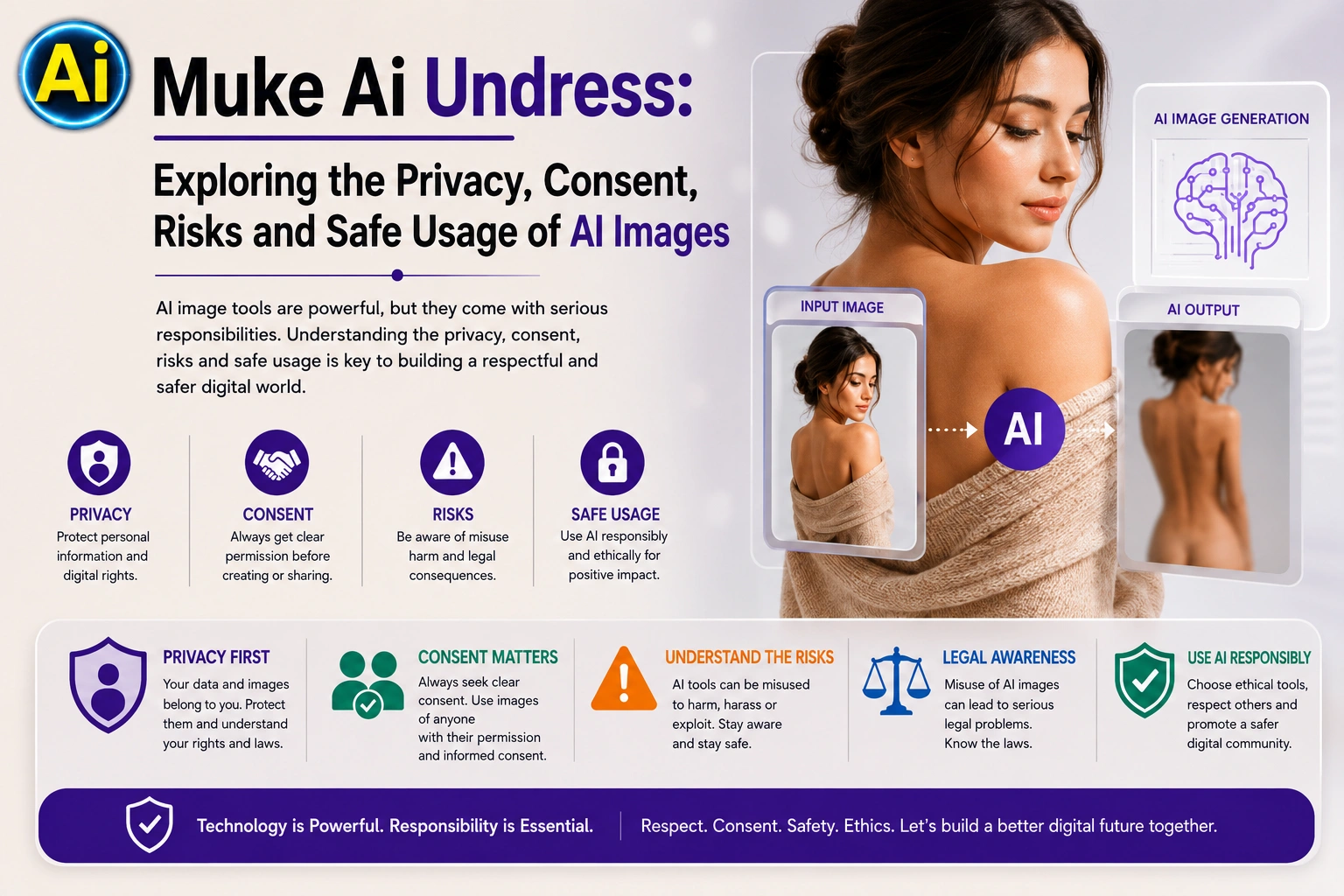
Explore the meaning of Muke Ai Undress in the realm of AI image tools, the importance of consent and privacy, the potential dangers of manipulated images, and the responsible use of AI image technology.
Introduction
The search term muke ai undress relates to an emerging field of AI image manipulation technology. In only a couple of years, Artificial Intelligence has been able to alter, enhance, edit and transform images in ways that were unimaginable a few years ago. These advancements can be beneficial for creative endeavors, education, entertainment, design and more. Meanwhile, certain AI image technologies can generate severe privacy and consent issues with the use of fake intimate images of real people.
It is important to know how this technology works at a basic level for students, parents, creators, website owners and for everyone who uses the internet. It doesn’t take a lot of technical expertise to understand the principal problems. The key concepts are privacy, consent, digital safety, responsible use of AI and respect for others.
What is the meaning of Muke Ai Undress?

Muke Ai Undress typically refers to an AI image manipulation idea where AI is used to manipulate a picture of a person. The concept is part of a broader trend of AI-generated or AI-edited images.The difference is relevant because the image of the modern model can learn the patterns from the photograph, and generate new pixels in a realistic fashion, but in a completely false image.For instance, an AI-generated image may seem like a genuine face in a context which it didn’t actually occur in. If someone looks at the image without any context, they might think it is the real thing. This may cause embarrassment, harassment, bullying, damage to reputation or emotional distress.
Thus, the technology must be related to digital responsibility. A picture may look fantastic but not suitable for someone else’s picture without permission.The process of how AI image manipulation functions.The working mechanism of AI image manipulation.Typically, AI image systems rely on large datasets of training images to learn the visual patterns. The model can be trained to recognize connections between objects, shapes, colors, textures, faces, clothing and environments, depending on the technology.If an image is submitted to the system, an AI system can analyze various elements of the image and generate a modified version based on its model and the specified transformation.
It is best to think of the process as:
- An image is given to the system.
- The AI evaluates the information of the image visually.
- A model determines what an image might be like.
- The system creates and/or edits pixels.
- The final image is then displayed to the user.
The output of the program is a prediction or synthesis. It is not intended as a description of the actual person depicted in the original photo.
Why AI-Generated Images Can Look Real
AI image technology is rapidly evolving. Realistic skin texture, shadows, hair, faces, body shape and background can be achieved with modern models.But this realism presents a significant issue: individuals can have a hard time determining authenticity of an image.
A bogus picture can include realistic features like:
- Natural-looking lighting
- Detailed textures
- Realistic facial features
- Similar body proportions
- Matching backgrounds
- Natural-looking shadows
- High image resolution
When the image seems convincing, the image’s visual appearance doesn’t necessarily constitute proof of the event depicted in the image.Why Consent is Crucial in AI Image Editing.Consenting is to freely allow or approve an action. Consent is important in photographs because a person should expect that his or her picture will not be used in a sensitive or intimate way without their consent.
When the edited image is of a nude or sexual image or any other private situation, this principle is particularly important.
The key is that the difference is easy to understand:
- Situation
- Consent Issue
- Editing your own photograph for normal creative purposes
- Usually lower risk
- Changing a Landscape Photo is the most difficult type of photo to edit.
- Usually low risk
- Creating a fictional character
- Usually lower risk
- Taking a frame from another person’s face for an intimate shot without their consent
- Serious concern
- Making authentic intimate photographs of an actual person.
- The issue of serious consent and privacy concern
- Sharing inappropriately a manipulated image – one which is sensitive.
- Serious harm and privacy concern.
AI can be used by artists to generate fictional characters. Designers can come up with ideas for products. Businesses can develop marketing concepts. Students may try out their visual storytelling. AI can be used by photographers to edit the background or restore images.The elements that are usually most different are the subject, purpose, and consent.Making up a character from scratch is not the same as posing a photo of a real person in a sexy pose.
Consider these examples:
- Making a fantasy landscape is a creative AI application.
- Creating a fictional superhero is an example of a creative uses of AI.
- You can make ordinary image editing even when removing unwanted objects from your own picture.
- The restoration of an old family photograph can come in handy.
- Using personal information on a fake image to create a close-up photo of a real person without their permission, is damaging.
- In some instances, the technology is the same, but the context and consequences are quite different.
- AI image tools come with certain risks regarding privacy.There are privacy risks associated with AI image tools.
- One of the primary concerns with online AI image services is their impact on privacy. People should take into consideration.
- A picture can contain more than just a person’s face.
Fake Intimate Pictures and Digital Harm
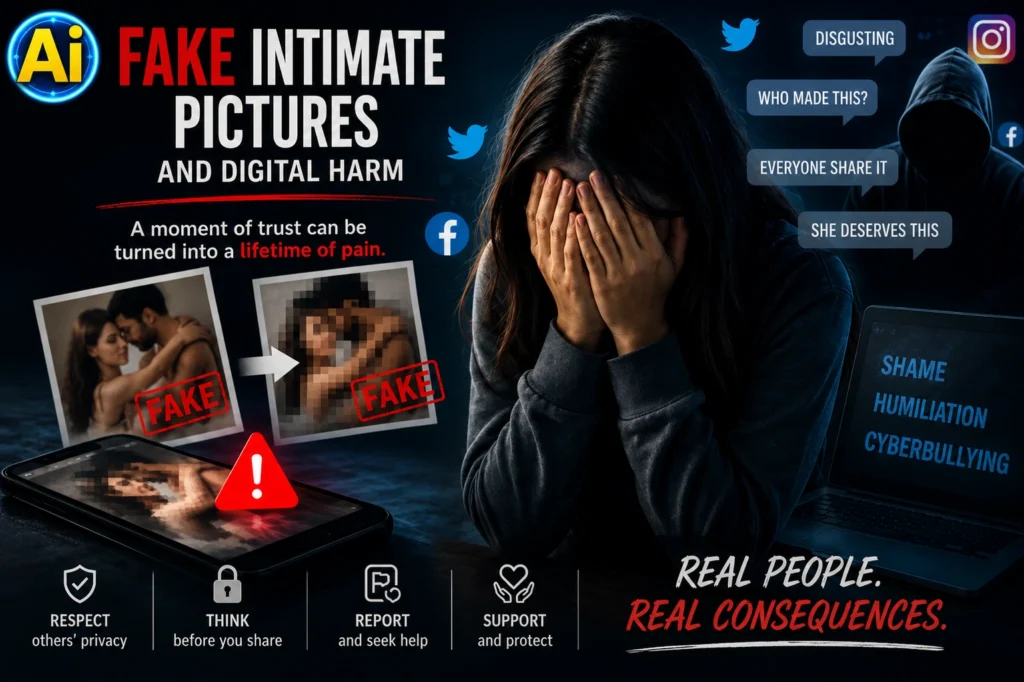
The creation of fake intimate images of real people is one of the most severe problems with AI image manipulation.They can still have a profound impact even if these images are completely man-made.
Victim victims can suffer from:
- Stress
- Fear
- Embarrassment
- Harassment
- Social pressure
- Bullying
- There is damage to personal relationships.Personal relationships are damaged.
- Workplace problems
- School problems
- Reputation damage
- If something is fake on a news site, then the harm is fake.
- Even if others think that the photo is authentic, the victim can still have severe repercussions.
That is why it is essential to have robust safeguards against abuse in responsible AI development.
The Problem With “It Is Only a Fake Image”
Some think that if it isn’t real, it can’t do any harm, and therefore, can be manipulated.This takes no account of people’s online information usage.Fake photos can be easily disseminated via social media, text messaging, forums, and private groups. When it’s copied, the original creator might not be able to exercise control over where it shows up.A viewer may be unaware of the fact that the image is synthetic.Screenshots and copies can still be found online even if an image is deemed false.Therefore, the importance of prevention is increased.
What is the relationship of AI Deepfakes to this Topic?
Deepfake is a catchall term for AI-generated or AI-manipulated media that can make a person seem to say or do something that they actually didn’t.
Deepfakes can involve:
- Images
- Videos
- Audio
- Faces
- Voices
- Expressions
- Body movements
There are some perfectly valid applications for the technology, such as in filmmaking and entertainment. But it can be misused, too.An instance of harmful synthetic media is fake intimate images.The broader message of the lesson is clear: Do not assume any image on the internet is realistic.

How to Recognize Potentially Manipulated Images
Detecting every generated image as AI is impossible with a visual technique. The capabilities of AI keep evolving over time and any glaring errors are becoming less frequent.Users may be able to find unexpected details, however.
Some of the signs that may indicate a problem are:
- A strange hand or finger shape.
- Ask:
- Who was the original poster of this image?
- Does it have a suitable source?
- Are there any previous versions available?
- Does the person in the picture agree?
- Are it is reliable source reporting the same event?
- Is the image being shared predominantly by anonymous accounts?
- Beware of any written information that appears realistic, even though it may be believed to be true.
Muke Ai Undress and Responsible AI Use
Individuals who look for Muke Ai Undress could be interested in comprehending AI image technology, being able to try out photo tools, or finding out about online trends.The best way to do this is to clearly distinguish between the good uses of AI and the bad.
The following are important factors to consider when using AI responsibly:
- Consent
- Privacy
- Accuracy
- Security
- Human dignity
- Legal responsibilities
- Potential harm
The most crucial point to remember is that it is strictly forbidden to generate intimate or Sexualized Images of real people without their explicit consent using AI.It’s true irrespective of the web site, application, model or AI platform.
Safe Alternatives for AI Image Editing
AI image generating tools can be used in numerous creative ways, without producing intimate images of real people.
Users can try different:
- Background replacement
- Image restoration
- Color correction
- Artistic styles
- Cartoon effects
- Fantasy scenes
- Fictional characters
- Product visualization
- Landscape generation
- Portrait lighting
- Object removal
- Image enhancement
These applications enable individuals to experiment with AI technology without puttin any person at risk.It is ok to make up a character for the story.An easy and safe way to experiment with generative image technology is to use fictional characters.Personal privacy concerns are not the same for a fictional character as they are for a real person.
For instance, developers can create:
- Fantasy characters
- Science-fiction characters
- Game characters
- Cartoon figures
- Imaginary historical scenes
- Fictional movie concepts
- Original fashion concepts
The creator is able to control the appearance of the character without taking someone’s picture and making it sensitive.
What Parents and Teachers Should Know
The young are living in an era where AI-generated media has become widespread.Parents and teachers can assist by telling them that not all photos on the internet are real.
Children and young people need to be aware of:
- Images can be modified.
- Video editing is possible.
- It is possible to clone voices.
- Faces can be changed.
- Fake content can be misleading and proliferate rapidly.
- Sexting can cause a big problem.
- The photographs of others should be respected.
- The intent shouldn’t just be to encourage young people to do without technology.
- Instead, they should learn how to responsibly use technology.
- Digital literacy is gaining importance as much as traditional media literacy.
- This is an online course that may be offered by H3 Teaching Consent.
- Consent should be communicated in an understandable manner.
- Respect must be given to people who do not wish their images to be altered, shared or used for a specific purpose.
It is an excellent guideline for youngsters:
When using another person’s photo, consider: “Before I use another person’s picture, I should think about what I want someone else to do when using my picture.A very straightforward concept that helps kids learn online respect.
What To Do If Your Image is Misused
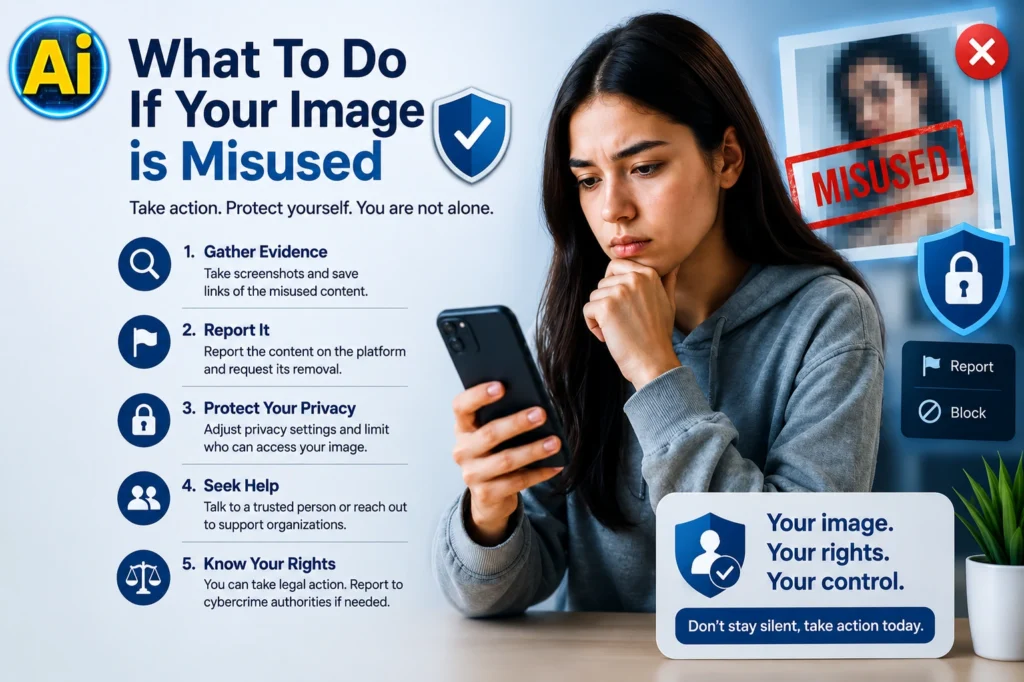
When someone finds out a manipulated intimate image of him or her has been created, or shared, it can be very overwhelming.The first thing to do is to remain calm and not spread the image any further.
Some helpful suggestions might be to:
- Keep documentation of the location of the image.
- Make note of the account names and URLs.
- Make screenshots as needed.
- Report to platform.
- Utilize privacy or abuse reporting systems available.
- Seek help from trusted individuals.
- Consider contacting appropriate legal or professional services if necessary.
- Don’t retaliate by making or posting hurtful “content” about the other person.
- Worse can be the case if the person retaliates.
Keep Evidence to be preserved carefully
There may be evidence that can help when reporting online abuse.
Some points that are important to include:
- Date and time
- The name of the website or platform.Name of the website or platform.
- Account username
- Post URL
- Screenshots
- Messages
- Report numbers
- Details about the place where content was disseminated
- But people should refrain from “sexting” repeatedly with intimate content.
- The purpose is to record the abuse without contributing to the spread of the material.
How AI technologies can be used to combat AI misuse
- Technology companies are also in a position to play an important role.
- AI image platforms could implement safety measures to lessen negative usage.
- Potential protections include:
- Blocking non-consensual intimate image generation
- Detecting suspicious prompts
- Restricting uploads of real people
- Providing reporting tools
- Removing harmful content
- Protecting minors
- Monitoring repeated abuse
- Improving privacy controls
- Ensuring the data is clearly explained about data retention.
- A prompt response to reports of abuse
- While no system will be perfect, the responsible design can minimize harm.
Why AI Safety Matters for Everyone
AI safety is more than just a technical problem.It impacts common people who might not ever have to use an AI image generator.It’s easy to become involved because someone else uploaded their photo.That’s because AI safety needs to be approached with both the perspective of users and individuals who could be featured in generated content.Services provided by good AI systems ought to be helpful, but also minimize common forms of misuse.Legal and Ethical Issues There are laws about manipulated images which can differ from country to country and evolve over time.
Protecting Your own Own Photographs Online
There are a number of steps that people take to limit the use of images inappropriately.Take a look at your social media privacy settings and only share certain personal photos with the public.
You can also:
- Do not display personal images that may reveal a lot online.
- Review followers and friends periodically.
- Have tight account passwords.
- Enable two-factor authentication.
- Beware of sites you don’t know.
- Avoid uploading private images to unfamiliar AI services.
- Lock up key accounts.
- Report anything suspicious immediately.
- There is no way to totally stop misuse, but minimizing unnecessary exposure can help.
Use Strong Account Security
If someone obtains access to your social media account, he or she could have the ability to download personal photographs and other data.Security of the accounts is a matter as a result of which.
Good practices include:
- Have different passwords for different big accounts.
- Enable two-factor authentication.
- Do not share verification codes.
- Beware of login links.
- Review connected applications.
- Remove old or unknown devices.
- Check account recovery information.
- The following basic steps can be taken to enhance personal digital security.
AI Image Privacy and Data Collection
Another big question is what to do with the images once they have been uploaded.Photographs might need to be processed on remote servers using AI services. Uploaded files might be kept for some time, depending on the company’s policies.
This is why it’s important to have a privacy policy.
See for signs of:
- Data storage
- Data deletion
- Model training
- Third-party sharing
- User rights
- Security practices
- Account deletion
- Image retention
Do not take it for granted that a picture goes away the moment it appears in the website search results.
Privacy Policies Matter
Though privacy policies can be a daunting document, there are only a few parts to consider.
Look for the words in the policy, including:
- Images
- Uploaded content
- Personal data
- Retention
- Deletion
- Training
- Third parties
- Security
- User content
Content Provenance and Authenticity
Content provenance refers to the maintenance of information regarding the source of digital content and changes to it.
This can assist individuals to determine if an image was:
Relocation of organisms by using a camera.Camera capture.
- Edited by a person
- Generated by AI
- Modified by software
- Repeatedly processed
What Makes AI Content User-Friendly?
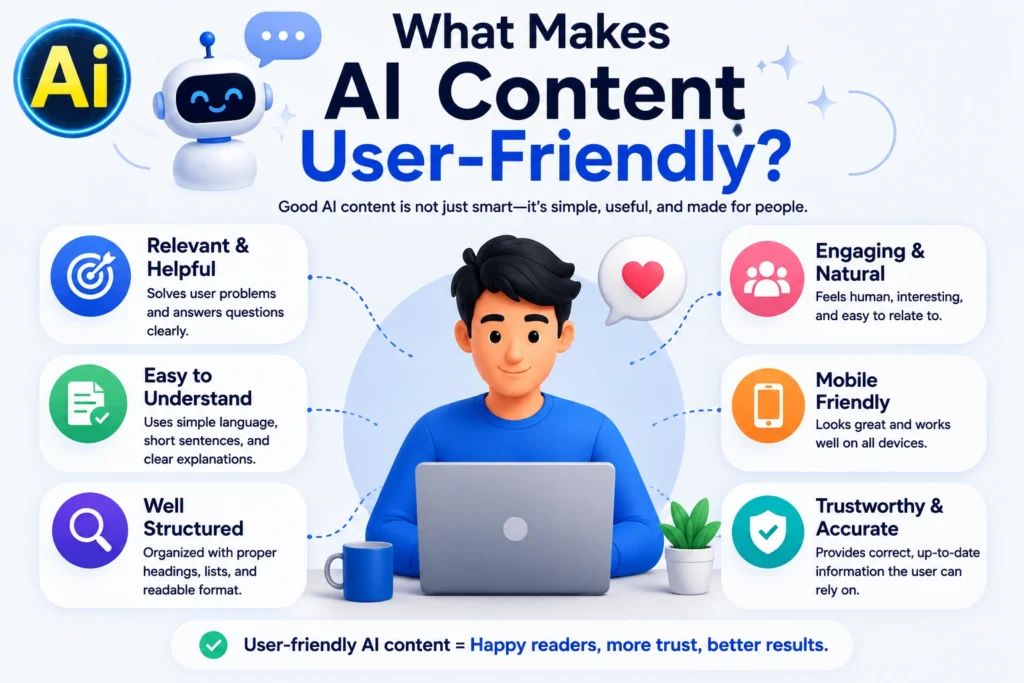
Content for an informational piece needs to be easily understandable.
Aestheticians find the discussion of technical jargon difficult to follow, and anyone who is in school or new to Artificial Intelligence finds it hard to follow the discussion.
A user friendly explanation should:
- Keep sentences short and to the point.
- Explain difficult words.
- Try to avoid using unnecessary technical jargon.
- Use meaningful headings.
- Give practical examples.
- Use tables when it helps to make comparisons.
- Include bullet points for salient information.
- Keep paragraphs focused.
- Don’t repeat yourself.
- Place the critical information at the start.
- This makes technology topics accessible to a wider audience.
- Common Misunderstandings About AI Undress Tools
- There are a few misconceptions about AI image manipulation.
Safe AI Image Editing for Creators
Creators can select projects that aren’t related to real humans’ close-up pictures.A creator, for instance, may create a new character for a fictional story.
The creator can make up the rules:
- Hair style
- Clothing
- Setting
- Lighting
- Age
- Character personality
- Color palette
- Artistic style
This offers a substantial creative area without having to utilize an actual individual’s personal appearance.
Creative Projects that are made with the help of AI and are Responsible
There are so many awesome projects that can be achieved with AI.
Examples include:
- Designing fictional worlds
- Creating concept art
- Building game environments
- Developing story characters
- Making educational illustrations
- Visualizing architecture
Creating product conceptsDesigning postersRestoring old photographsMaking art portraits that aren’t sensitive in nature.Making non-sensitive artistic portraits.These are just a few examples of how AI image generation can be used to achieve positive results without being misused.30 Seconds of AI: How Businesses Should Think About AI Image ToolsThe use of AI tools that include customer images, employee images, or confidential images should be taken with extra caution by businesses.
A company needs to have clear guidelines on:
- Approved AI services
- Sensitive data
- Customer images
- Employee photographs
- Confidential information
- Data retention
- Security
- Copyright
- Consent
- Review procedures
- Don’t just take for granted that a free online AI service is right for business data.
- Even if a company photograph appears to be nothing more than a picture, it may have confidential information.
AI and the Protection of Minors
The protection of children and teens should be given special consideration.Images with minors must be treated with far greater care.AI should not be used to produce sexual or intimate material of minors.
Preventing such abuse is a joint responsibility of parents, schools, platforms and technology companies.Children and young people should also be encouraged not to upload personal images to strangers or unknown services.Children and youth who receive harmful manipulated content should not feel alone in facing up to it; they should be asked to share it with a trusted adult.
Benefits of Learning About AI Image Safety
Knowing about the safety of AI-generated images offers a few advantages.It aids consumers in making informed decisions when online.It also helps you recognise suspicious information and why certain AI applications raise grave concerns.Digital safety knowledge can be beneficial for students as they continue through education and work.For Parents it can help to make discussions around online privacy easier.It may contribute to setting up responsible practices with creators.In the case of enterprises, it can help minimize privacy issues.AI literacy is thus an emerging component of the current digital literacy.
Ethics in AI
It can help people:
- Learn
- Create
- Translate
- Design
- Research
- Organize information
- Restore media
- Develop software
- Explore ideas
- It’s not about rejecting all AI technology.
The more fundamental step is to know what it can do, what it can’t do, and draw sensible limits.
Muke Ai Undress Search Topic
Term Muke Ai Undress can be considered a subject that could interest individuals seeking knowledge about AI image manipulation.A responsible article must not just push a particular product because it is being searched for a keyword.Ideal content should address the questions that lie beneath the reader’s head, and keep safety in mind.Search queries are subject to different intents.
Some may wish for:
- A basic explanation
- Information about AI image editing
- Privacy information
- Safety advice
- Ethical guidance
- Information about deepfakes
- Ways to protect personal photographs
- The information is related to the topic of responsible AI.
- A good article can meet these needs without implying any kind of unwholesome manipulation of the image.
How to Choose Safer AI Image Tools
If you’re searching for an AI image editor, you should prioritize platforms that are transparent about their functions and privacy policies.
Look for services that provide:
- Clear terms of use
- A comprehensive privacy policy is provided.
- Transparent data practices
- Secure connections
- Content safety rules
- Abuse reporting
- Account controls
- Data deletion options
- Clear company information
An application with an explanation of its functions is more easily judged than an unknown site promising too much.
Red Flags on AI Image Websites
If you see several warning signs, you should be cautious about using a website.
Examples include:
- No privacy policy
- No company information
- Inquiries for unrelated personal information
- Aggressive download prompts
- Suspicious advertisements
- The impossible promises made.The impossible promises given.
- There is no process in place to report abuse.
- No information on data retention.
- Requests for photos that are very sensitive.
- The need to produce content rapidly.
It is important to note that a single warning sign does not necessarily indicate that a service is malicious, but multiple warning signs should alert users that they are being served a potentially malicious service.
Protecting Digital Identity in the AI Era
Digital identity is more than just a username.
It can include:
- Your face
- Your name
- Your photographs
- Your voice
- Your writing style
- Your social media accounts
- Your location
- Your professional information
- With the advent of more powerful AI, it matters more and more.
- Users need to be mindful of information they post online and where they share personal data.
The Future of Consent Based Image Editing
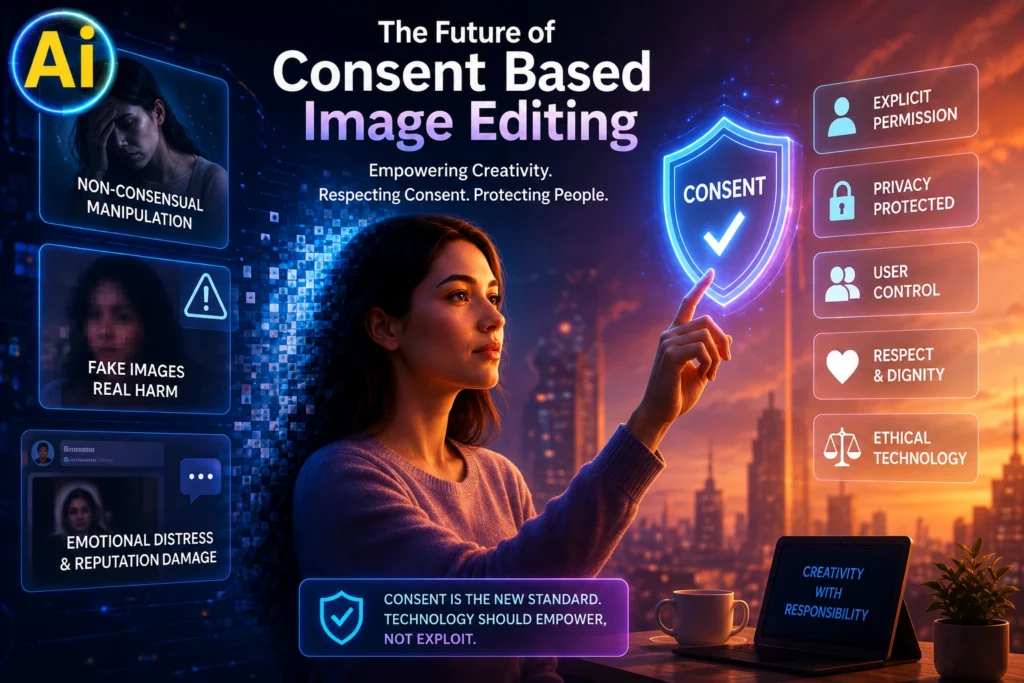
With consent included in the design, a bright future lies ahead for AI image technology.
Other systems could implement more effective techniques to verify authorization prior to applying transformations on images that allow access to sensitive data.Other systems could implement more effective techniques to verify authorization before applying transformations on images that allow access to sensitive data.
Some possible strategies might be:
- Verified consent systems
- Better identity controls
- Image provenance
- User-controlled permissions
- Automated abuse detection
- Stronger platform policies
- Better reporting systems
- .
People who understand:
- Consent
- Privacy
- AI generation
- Deepfakes
- Digital identity
- Cybersecurity
- Online reporting
- Are more ready to adapt to future change.
Final Thoughts
The search term “Muke Ai Undress” is associated with a specific aspect of the sensitive realm of AI-driven image manipulation. While the technology of AI-generated images can be impressive, there are difficulties when it comes to real people, close-up photos, or consent violations.The key thing to remember is that AI-generated images are not necessarily accurate. A realistic image can be totally artificial. Users need to be mindful of what they believe, create, post and share online when it comes to sensitive visual content.
Before adopting any AI image service online, privacy must also be taken into account. Personal photographic images may include important information related to identity and personal life. Users are required to check privacy policies, understand practices and practices of data, and do not upload sensitive content to services that are not trusted.Consent is also a crucial factor. Uses of a person’s picture in intimate or sexualized ways must be done with explicit consent. Being publicly available does not mean that the person has no right to be treated with dignity and respect.